Saying ‘No to the Big Dig’
Patan Durbar Square remains a very valuable archaeological site and should be left undisturbed
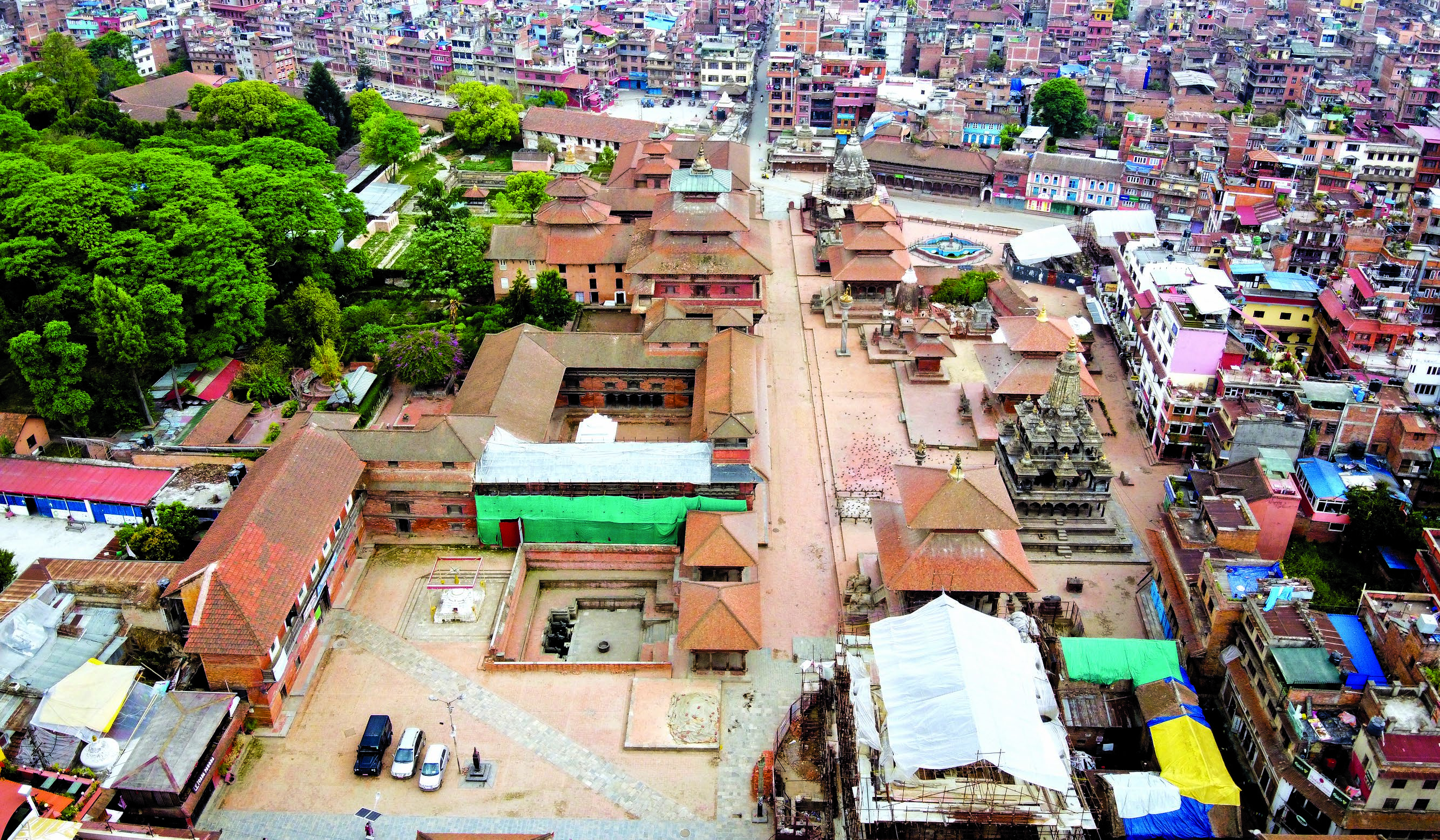
Naresh Shrestha / THT
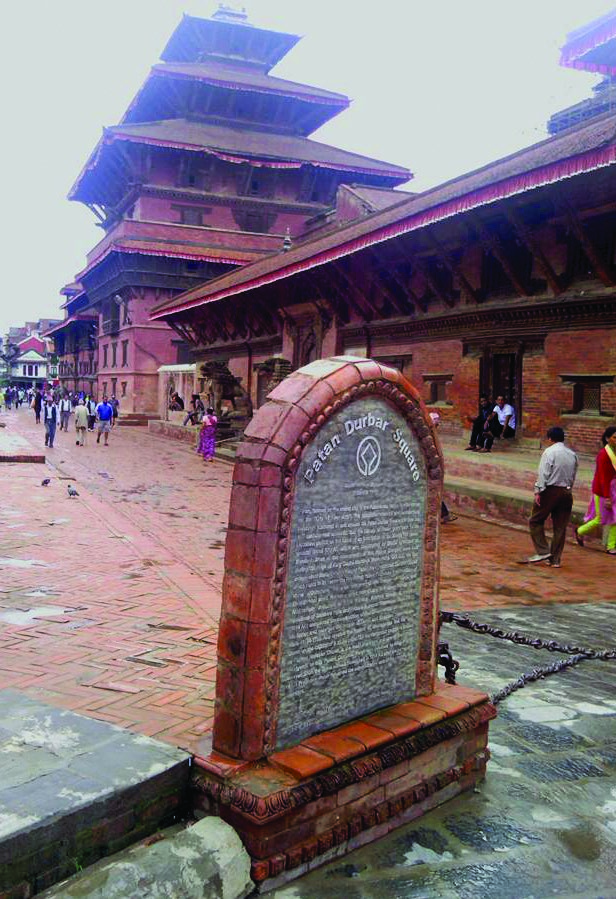
Photos: Courtesy Badan L Nyachhyon
Patan Durbar Square
Patan Durbar Square
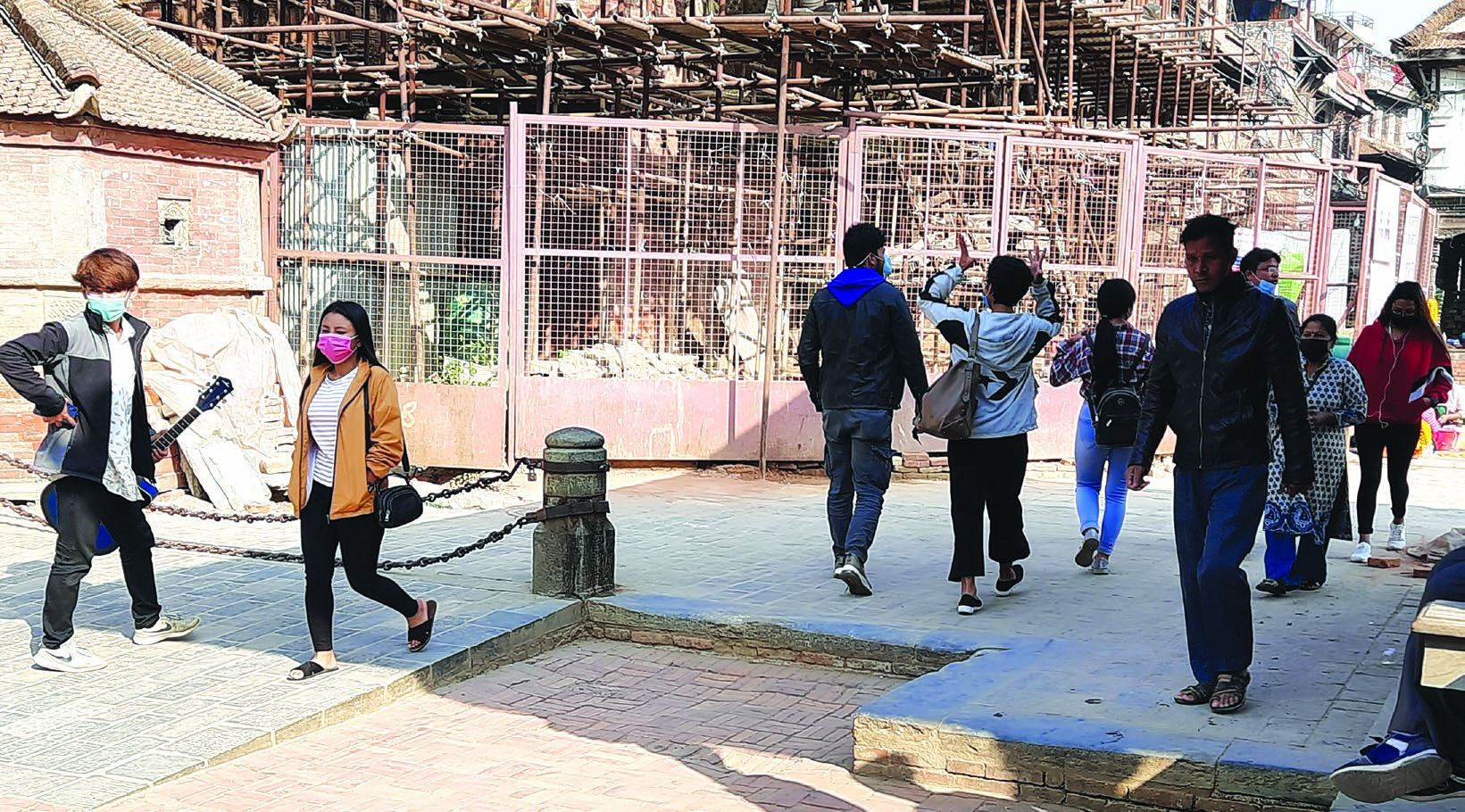
Flood blocking steps


These words, “Patan Durbar Square. World Heritage Monument. (Listed in 1979). Patan, famous as the oldest city in Kathmandu Valley, is also known as the ‘City of Fine Arts’” are chiselled on a shilapatra (stone edifice) erected by the Nepal Tourism Board and the Department of Archaeology.
UNESCO’s certification of Patan Durbar Square (PDS) Complex, the finest World Jewel with a history tracing back to the third century BC and to the Kirat dynasty, as a World Heritage Site (WHS) is noted in Professor Eduard F Sekler’s 1985 report to UNESCO. “The Patan Durbar Square Monument Zone, upon request by HM Government, is included in the World Heritage List, with all the advantages and obligation such a listing entail”.
Custodians Lalitpur Metropolitan City (LMC) and the Government of Nepal bear monumental responsibilities and are duty-bound as noted in the report.
“Nepal, as a State party signatory to the 1972 World Heritage Convention, has obligations for their preservation and conservation. … only such cultural properties are included that are deemed to be of outstanding universal value; this means they must meet certain stringent criteria and the test of authenticity in design, materials, workmanship or setting … It has been called ‘a marvel beyond the power of words’.”
Wolfgang Korn opined, “Of the three palace squares, this is the best preserved, retaining most of its original form”... “this square constitutes perhaps the most spectacular example of Newar architecture within any urban context.”
The LMC’s utility project crossing PDS undermines the very basis for this declaration as a protected World Heritage Monument.
Recognising the potential permanent damages and destruction to PDS by this project, Lalitpur Centre for Culture Conservation (LCCC) alerted the government, LMC, UNESCO and others in March 2019. LC- CC’s plea to abandon the plan to dig and instal a new drainage system across PDS went unheard.
LCCC proposed a more rational and viable approach — using the existing age-old traditional drainage system to save this World Jewel and if required to instal new diversion drainages described below. However, the ‘Big Dig’ has started.
Characteristically, ‘Development’ and ‘Heritage Conservation’ goals compete and conflict with each other though they are two sides of the same coin.
Heritage advocates always support the ‘Rational Development for the Public Good’. Resolutions occur through introspection, mutual trust, transparent public consultation and appropriate use of modern technological innovations. Mitigating seasonal flooding requires recognition of ancient systems and values, taking prudent corrective actions and addressing past mistakes from unmanaged urban growth and heritage conservation.
An ADB Consultant Amy Faust starts her article, Working closely with the Government of Nepal to reduce flooding in Patan Durbar Square, July 2019 with —“Patan Durbar Square is a jewel of Kathmandu” and ends with “… assets, providing a learning opportunity for other heritage areas in Nepal”.
This approach remains unacceptable, as it permits heritage destruction in all heritage sites in Nepal. Under no circumstances, should PDS serve as the ‘Guinea Pig’.
LMC’s project uses a five feet diameter PVC pipe, embedded about 10 feet below the existing ground across PDS and beyond to discharge both sanitary sewer and the flood waters. Water, underground telephone and electrical lines are included.
LMC claims that UNESCO and ADB have approved the drainage construction, and by default results in the destruction of this World Monument Zone.
Motives cannot be questioned.
Given Lalitpur’s historic, archaeological and heritage importance, such decisions by authorities must address the voices of all without discrimination.
Has Nepal’s government, under its sovereign authority, come to the right decision? What is UN- ESCO’s commitment to the protection promised and guaranteed by World Monument Zone? Surely, saving Nepal’s crown jewels and not destroying them is the ultimate objective.
An estimated 10 feet deep and 30 feet wide trench crossing 500 feet of PDS will be required to ensure stability, safety, and workable spaces and accommodate the proposed PVC drain and other utilities. Such a trench will undermine the existing traditional foundations of heritage structures and the existing Hahkha Khusi. Destroying the heart and soul of Yala Layaku impacts this archaeological and World Heritage site. UNESCO’s blessing, if any, and LMC’s approval must mitigate these grave issues of safety, violation of international agreements, and heritage conservation.
Lord Krishna devotee and poet king, Siddhi Narsingh Malla constructed Patan Durbar Royal Palace Complex, including the Yala Layaku around 400 years ago by displacing a Buddhist Mahabihar. Recognising this unprecedented and historic event, a replica of the ancient Mahabihar, in the form of a copper tank and a Buddha idol, is displayed annually during the month of ‘Gunla’ at the entry of the Golden Window Palace.
King Siddhi Narsingh was directed in a dream to recover Radhakrishna’s idol, enshrined in today’s Krishna Mandir, from ancient ruins at the current mandir site. The remains of the Buddha Mahabihar, secret Bhandarkhal tunnel, the water conduits to Tusha and Mangah Hitis, and Siddhi Narshingh’s signature at the Ivory Window Palace, represented by three idols of Ganesh, Narshing and Hanuman, are other valued archaeological gems. Faust points to the unexplored archaeological significance of PDS with this note: “As the City has been built and rebuilt over the centuries, untold layers of Kathmandu’s past lie beneath the traditional red brick plaza and monuments”.
PDS remains as a very valuable archaeological site and should be left undisturbed based on these facts.
Generations of local communities guarded the site and the vast tangible and intangible heritage at PDS Complex. Funeral processions, toilets and sanitary sewers, waste dumping, noise pollution and others are prohibited at PDS as per prescriptive age-old practices.
The Department of Archaeology, respecting the Intangible Heritage Code, recently relocated all toilets in the Patan Museum Building and prohibited the construction of new toilets in this area. The pristine ambience — free from inauspicious environments — is the characteristics of this sacred World Heritage Site. Unique and auspicious cultural and heritage events of Kartik Dance, Traditional Nepal Music Day in June and numerous festivals based on tantric rituals are performed here.
Nepal’s Monuments Preservation Act of 1956 mandates the protection and preservation of heritage. Yet, the Government of Nepal has received several notifications from UNESCO about the degrading state of Nepal’s monument zones. Periodically, UNESCO evaluates these monument zones and decertify them when internationally agreed criteria are violated.
How UNESCO reacts to the current ‘Big Dig’ at PDS remains untested.
Given the frightening pace of heritage destruction in Nepal, this project, once again, offers opportunities to introspectively reflect on the status of development and heritage preservation.
The Ring Road expansion almost destroyed Swayambhu’s thousand Buddha statues. Reconstructed Rani Pokhari diminished its heritage values. Kal Mochan Temple’s reconstruction switched the body parts of four corner lions of Vastu significance; replaced the original Gajjur. The Guthi Bill, Machendranath Festival, Khokana settlements, Pashupati Master Plan, Bagmati Conservation and many others manifest the continuing struggles to preserve and protect heritage.
Infrastructure Development at WHS requires a paradigm shift and commitment to ‘Development with Heritage Conservation’, ‘Public Safety and Heritage First’ concepts and establishing a ‘National Heritage Council’ to create an impactful platform for respectful and unbiased debate between authorities and the public to resolve emerging issues and find mutually acceptable solutions. A ‘Heritage Impact Assessment’ would be another useful tool to identify and mitigate risks from projects that intrude into heritage sites. Minimally intrusive, documented, planned and carefully executed approaches are used to cherish and conserve archaeological and heritage values. Physical interventions are avoided when rational alternatives are available.
Alternative solutions that complement development efforts can resolve flooding and save heritage from permanent damage. Historic flood corridors and water management systems, including six known traditional drainage channels from Pulchowk to the Patan Durbar Square, exist. Ancient water management systems diverted water via the Royal Canal from the Lele River at Tika Bhairab. A series of balancing reservoirs, ponds, wells, underground stone water hitis and underground aquifers maintained the water system.
Unmaintained traditional channels, blocked or damaged rain inlets (at Hatkeshwor Mahadev and depressed Big Stone Bhairabs at several places), undersized rain inlets (at Mahapal and along Hahkha Khusi) and the step near Mangah Hiti contribute to Mangal Bazar’s flooding.
The existing Kwalakhu- Konti gravity flow channel originates at Mahapal and the Hahkha Khusi holy rivulet starts at the Nhupukhu Lagankhel (or Tangal) Aquifer. These channels, documented in Nepal Water Supply Corporation (NWSC), Map 1993, if retrofitted and maintained, using modern technology, can successfully manage the flooding.
The ‘Big Dig Across PDS’ is unnecessary and remains unjustified.
Rainwater from Yala Layaku catchment can be drained through optimised and retrofitted these existing drainage systems. Utilising the Hahkha Kushi, Mahapal-Konti lines and removing the step near Mangah Hiti will efficiently drain the floodwaters. New diversion drainage lines along the Mangal Bazar- Saugaul -Gwarko Lane and Kumaripati-Gwarko lane would permanently resolve the flooding problems.
This advocacy for ‘No to The Big Dig’ provides an excellent opportunity to save this World Heritage Site, Patan Durbar Square and strongly uphold the National Pride and Image. We cannot afford losing it.
UNESCO’s certification of Patan Durbar Square (PDS) Complex, the finest World Jewel with a history tracing back to the third century BC and to the Kirat dynasty, as a World Heritage Site (WHS) is noted in Professor Eduard F Sekler’s 1985 report to UNESCO. “The Patan Durbar Square Monument Zone, upon request by HM Government, is included in the World Heritage List, with all the advantages and obligation such a listing entail”.
Custodians Lalitpur Metropolitan City (LMC) and the Government of Nepal bear monumental responsibilities and are duty-bound as noted in the report.
“Nepal, as a State party signatory to the 1972 World Heritage Convention, has obligations for their preservation and conservation. … only such cultural properties are included that are deemed to be of outstanding universal value; this means they must meet certain stringent criteria and the test of authenticity in design, materials, workmanship or setting … It has been called ‘a marvel beyond the power of words’.”
Wolfgang Korn opined, “Of the three palace squares, this is the best preserved, retaining most of its original form”... “this square constitutes perhaps the most spectacular example of Newar architecture within any urban context.”
The LMC’s utility project crossing PDS undermines the very basis for this declaration as a protected World Heritage Monument.
Recognising the potential permanent damages and destruction to PDS by this project, Lalitpur Centre for Culture Conservation (LCCC) alerted the government, LMC, UNESCO and others in March 2019. LC- CC’s plea to abandon the plan to dig and instal a new drainage system across PDS went unheard.
LCCC proposed a more rational and viable approach — using the existing age-old traditional drainage system to save this World Jewel and if required to instal new diversion drainages described below. However, the ‘Big Dig’ has started.
Characteristically, ‘Development’ and ‘Heritage Conservation’ goals compete and conflict with each other though they are two sides of the same coin.
Heritage advocates always support the ‘Rational Development for the Public Good’. Resolutions occur through introspection, mutual trust, transparent public consultation and appropriate use of modern technological innovations. Mitigating seasonal flooding requires recognition of ancient systems and values, taking prudent corrective actions and addressing past mistakes from unmanaged urban growth and heritage conservation.
An ADB Consultant Amy Faust starts her article, Working closely with the Government of Nepal to reduce flooding in Patan Durbar Square, July 2019 with —“Patan Durbar Square is a jewel of Kathmandu” and ends with “… assets, providing a learning opportunity for other heritage areas in Nepal”.
This approach remains unacceptable, as it permits heritage destruction in all heritage sites in Nepal. Under no circumstances, should PDS serve as the ‘Guinea Pig’.
LMC’s project uses a five feet diameter PVC pipe, embedded about 10 feet below the existing ground across PDS and beyond to discharge both sanitary sewer and the flood waters. Water, underground telephone and electrical lines are included.
LMC claims that UNESCO and ADB have approved the drainage construction, and by default results in the destruction of this World Monument Zone.
Motives cannot be questioned.
Given Lalitpur’s historic, archaeological and heritage importance, such decisions by authorities must address the voices of all without discrimination.
Has Nepal’s government, under its sovereign authority, come to the right decision? What is UN- ESCO’s commitment to the protection promised and guaranteed by World Monument Zone? Surely, saving Nepal’s crown jewels and not destroying them is the ultimate objective.
An estimated 10 feet deep and 30 feet wide trench crossing 500 feet of PDS will be required to ensure stability, safety, and workable spaces and accommodate the proposed PVC drain and other utilities. Such a trench will undermine the existing traditional foundations of heritage structures and the existing Hahkha Khusi. Destroying the heart and soul of Yala Layaku impacts this archaeological and World Heritage site. UNESCO’s blessing, if any, and LMC’s approval must mitigate these grave issues of safety, violation of international agreements, and heritage conservation.
Lord Krishna devotee and poet king, Siddhi Narsingh Malla constructed Patan Durbar Royal Palace Complex, including the Yala Layaku around 400 years ago by displacing a Buddhist Mahabihar. Recognising this unprecedented and historic event, a replica of the ancient Mahabihar, in the form of a copper tank and a Buddha idol, is displayed annually during the month of ‘Gunla’ at the entry of the Golden Window Palace.
King Siddhi Narsingh was directed in a dream to recover Radhakrishna’s idol, enshrined in today’s Krishna Mandir, from ancient ruins at the current mandir site. The remains of the Buddha Mahabihar, secret Bhandarkhal tunnel, the water conduits to Tusha and Mangah Hitis, and Siddhi Narshingh’s signature at the Ivory Window Palace, represented by three idols of Ganesh, Narshing and Hanuman, are other valued archaeological gems. Faust points to the unexplored archaeological significance of PDS with this note: “As the City has been built and rebuilt over the centuries, untold layers of Kathmandu’s past lie beneath the traditional red brick plaza and monuments”.
PDS remains as a very valuable archaeological site and should be left undisturbed based on these facts.
Generations of local communities guarded the site and the vast tangible and intangible heritage at PDS Complex. Funeral processions, toilets and sanitary sewers, waste dumping, noise pollution and others are prohibited at PDS as per prescriptive age-old practices.
The Department of Archaeology, respecting the Intangible Heritage Code, recently relocated all toilets in the Patan Museum Building and prohibited the construction of new toilets in this area. The pristine ambience — free from inauspicious environments — is the characteristics of this sacred World Heritage Site. Unique and auspicious cultural and heritage events of Kartik Dance, Traditional Nepal Music Day in June and numerous festivals based on tantric rituals are performed here.
Nepal’s Monuments Preservation Act of 1956 mandates the protection and preservation of heritage. Yet, the Government of Nepal has received several notifications from UNESCO about the degrading state of Nepal’s monument zones. Periodically, UNESCO evaluates these monument zones and decertify them when internationally agreed criteria are violated.
How UNESCO reacts to the current ‘Big Dig’ at PDS remains untested.
Given the frightening pace of heritage destruction in Nepal, this project, once again, offers opportunities to introspectively reflect on the status of development and heritage preservation.
The Ring Road expansion almost destroyed Swayambhu’s thousand Buddha statues. Reconstructed Rani Pokhari diminished its heritage values. Kal Mochan Temple’s reconstruction switched the body parts of four corner lions of Vastu significance; replaced the original Gajjur. The Guthi Bill, Machendranath Festival, Khokana settlements, Pashupati Master Plan, Bagmati Conservation and many others manifest the continuing struggles to preserve and protect heritage.
Infrastructure Development at WHS requires a paradigm shift and commitment to ‘Development with Heritage Conservation’, ‘Public Safety and Heritage First’ concepts and establishing a ‘National Heritage Council’ to create an impactful platform for respectful and unbiased debate between authorities and the public to resolve emerging issues and find mutually acceptable solutions. A ‘Heritage Impact Assessment’ would be another useful tool to identify and mitigate risks from projects that intrude into heritage sites. Minimally intrusive, documented, planned and carefully executed approaches are used to cherish and conserve archaeological and heritage values. Physical interventions are avoided when rational alternatives are available.
Alternative solutions that complement development efforts can resolve flooding and save heritage from permanent damage. Historic flood corridors and water management systems, including six known traditional drainage channels from Pulchowk to the Patan Durbar Square, exist. Ancient water management systems diverted water via the Royal Canal from the Lele River at Tika Bhairab. A series of balancing reservoirs, ponds, wells, underground stone water hitis and underground aquifers maintained the water system.
Unmaintained traditional channels, blocked or damaged rain inlets (at Hatkeshwor Mahadev and depressed Big Stone Bhairabs at several places), undersized rain inlets (at Mahapal and along Hahkha Khusi) and the step near Mangah Hiti contribute to Mangal Bazar’s flooding.
The existing Kwalakhu- Konti gravity flow channel originates at Mahapal and the Hahkha Khusi holy rivulet starts at the Nhupukhu Lagankhel (or Tangal) Aquifer. These channels, documented in Nepal Water Supply Corporation (NWSC), Map 1993, if retrofitted and maintained, using modern technology, can successfully manage the flooding.
The ‘Big Dig Across PDS’ is unnecessary and remains unjustified.
Rainwater from Yala Layaku catchment can be drained through optimised and retrofitted these existing drainage systems. Utilising the Hahkha Kushi, Mahapal-Konti lines and removing the step near Mangah Hiti will efficiently drain the floodwaters. New diversion drainage lines along the Mangal Bazar- Saugaul -Gwarko Lane and Kumaripati-Gwarko lane would permanently resolve the flooding problems.
This advocacy for ‘No to The Big Dig’ provides an excellent opportunity to save this World Heritage Site, Patan Durbar Square and strongly uphold the National Pride and Image. We cannot afford losing it.