Fables from the SERPENT LAKE
Nischal Niraula recounts tales of the ethereal Nagdaha
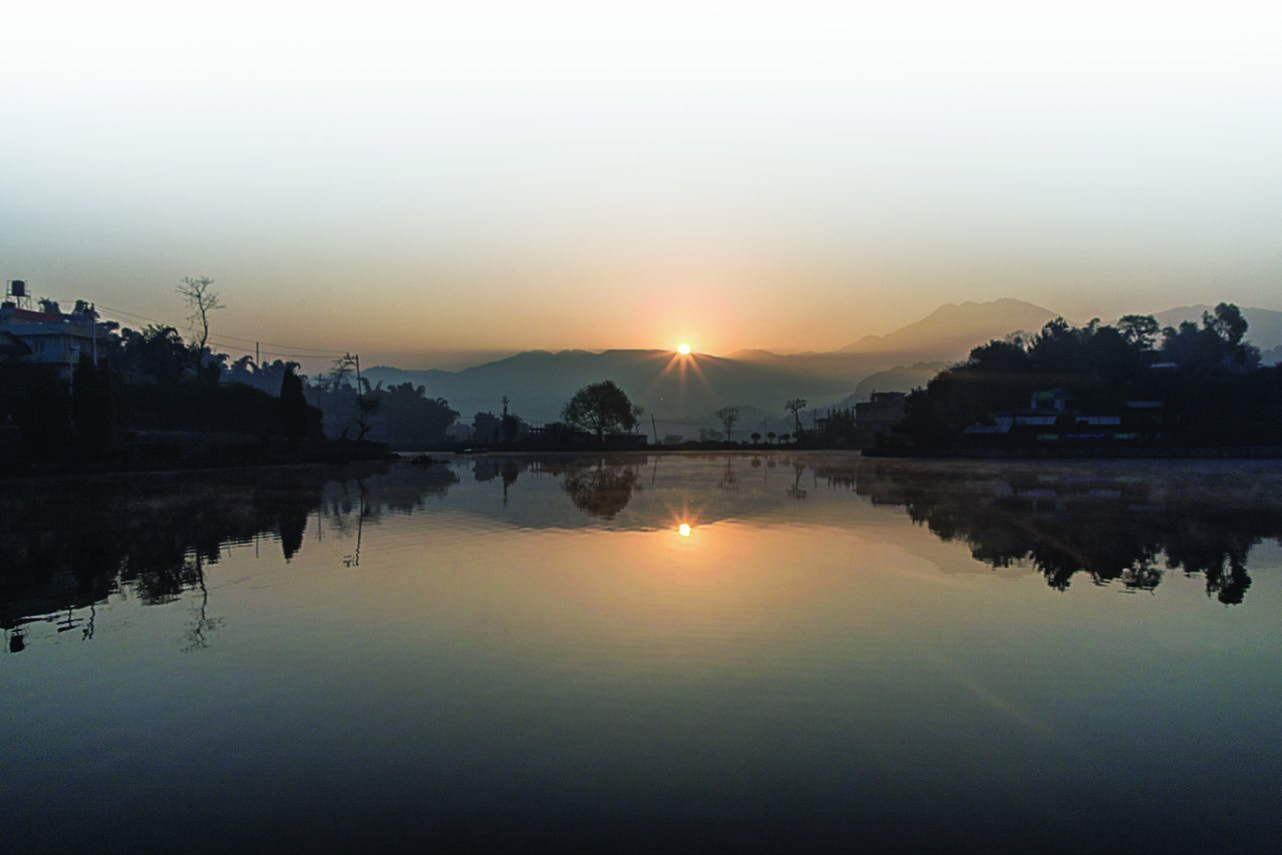


Where once a serene and clear lake surrounded by luscious forests existed, now a somewhat polluted Nagdaha lies in the Dhapakhel Rural Municipality of Lalitpur district. Nagdaha is a funnel shaped lake. One intriguing thing about Nagdaha is that you can never see one corner of the lake from another corner. The lake is associated with various myths and folklore from the past, which the locals often recount to visitors.
A local café owner Indra Lal Maley shares a local fable of the Buddhist deity Manjushree who drained the water in the Kathmandu Valley by cutting the hills of Chobhar with his sword.
Manjushree allowed the snakes residing in the lake to live in several other lakes scattered throughout the Valley as well.
Recounting another mythological legend, Maley said that in the ancient days, Lord Shiva used to reside in Nagdaha. This worried goddess Bajrabarahi, whose abode was in the same area, as the number of her devotees started decreasing.
The goddess then transformed into a pig, an animal often associated with filth in our society, and started grunting around Lord Shiva. Fearing that the lake had become contaminated, Lord Shiva started looking for a clean lake and inhabited the holy lake of Gosainkunda.
In the olden days, whenever people needed cooking utensils on the occasion of festivals, locals used to write a list of required appliances on a piece of paper and conduct prayers at Nagdaha. Their prayers would be miraculously answered and the utensils listed would float over the holy pond the very next day.
These extraordinary occurrences stopped once people started returning the utensils without cleaning them properly. A local tea shop owner, Shiva Ram Maharjan, offers a rational explanation, saying, “A generous social worker used to live in the Nagdaha area who would offer his utensils to the devotees in order to strengthen their beliefs. However, after noticing the disrespectful behaviour from the people who would not return the appliances at all or return the utensils without cleaning them properly, he put a stop to his offerings.”
According to Maley, around 50-60 years ago, when the water in the lake was as clear as the sky on a sunny day, locals would drink directly from the pond. The thick and bulky roots of the lotus flower that blossomed on the lake would purify the water naturally making it safe to drink. However, as time passed, the water started getting so grimy that even the miraculous roots failed to cleanse the polluted lake.
Nagdaha gets frequent visits of pilgrims, especially during the festival of Nag Panchami. During Nag Panchami, people from all over the country visit the lake to seek blessings from the gods. It is believed that the serpent god appears on the day of the festival; hence, snake posters are pasted over the entrance of the houses surrounding Nagdaha in order to keep harmful snakes away. On this day, a fair is organised where merchants sell toys, food, clothes among various other items. Additionally, different cultural and musical programmes are organised for the amusement of visitors. Digging the land is considered a taboo on this special day as the locals believe doing so could kill the snakes residing underground.
The lake also gets visitors during Rishi Panchami. Women all around visit to bathe in the holy lake and worship Saptarishi (seven sages) in the nearby temples. The boating business in Nagdaha commenced due to the efforts of a visiting contractor named Karma Lama in 2008, who was captivated by its beauty. It was Lama’s first visit to the lake. As he sat gazing at the lake while sipping tea at a local tea shop, he said, “What a beautiful lake it is? Why do people from Kathmandu insist on going to Pokhara when we have such an alluring lake nearby? Maybe it’s the boats that Nagdaha lack.”
And with this Lama donated seven boats to Nagdaha Sudhar Samiti, the group responsible for betterment of the lake.
The boating business, however, didn’t last long. While boating in the lake, a group of four friends started rocking the boat causing it to be filled with water and ultimately, drowning along with the people it was carrying. According to Maley, this triggered an outrage from the deceased’s family members, which, in 2012, ultimately caused the boating business to close down for a couple of years.
The boating business took off again around 2014.
According to locals, approximately one person drowns in the lake every year and dies. Maley says, “The death toll mostly consists of inexperienced swimmers visiting the lake.”
The locals are now consciously trying their best to preserve the culturally and historically rich lake.
A local café owner Indra Lal Maley shares a local fable of the Buddhist deity Manjushree who drained the water in the Kathmandu Valley by cutting the hills of Chobhar with his sword.
Manjushree allowed the snakes residing in the lake to live in several other lakes scattered throughout the Valley as well.
Recounting another mythological legend, Maley said that in the ancient days, Lord Shiva used to reside in Nagdaha. This worried goddess Bajrabarahi, whose abode was in the same area, as the number of her devotees started decreasing.
The goddess then transformed into a pig, an animal often associated with filth in our society, and started grunting around Lord Shiva. Fearing that the lake had become contaminated, Lord Shiva started looking for a clean lake and inhabited the holy lake of Gosainkunda.
In the olden days, whenever people needed cooking utensils on the occasion of festivals, locals used to write a list of required appliances on a piece of paper and conduct prayers at Nagdaha. Their prayers would be miraculously answered and the utensils listed would float over the holy pond the very next day.
These extraordinary occurrences stopped once people started returning the utensils without cleaning them properly. A local tea shop owner, Shiva Ram Maharjan, offers a rational explanation, saying, “A generous social worker used to live in the Nagdaha area who would offer his utensils to the devotees in order to strengthen their beliefs. However, after noticing the disrespectful behaviour from the people who would not return the appliances at all or return the utensils without cleaning them properly, he put a stop to his offerings.”
According to Maley, around 50-60 years ago, when the water in the lake was as clear as the sky on a sunny day, locals would drink directly from the pond. The thick and bulky roots of the lotus flower that blossomed on the lake would purify the water naturally making it safe to drink. However, as time passed, the water started getting so grimy that even the miraculous roots failed to cleanse the polluted lake.
Nagdaha gets frequent visits of pilgrims, especially during the festival of Nag Panchami. During Nag Panchami, people from all over the country visit the lake to seek blessings from the gods. It is believed that the serpent god appears on the day of the festival; hence, snake posters are pasted over the entrance of the houses surrounding Nagdaha in order to keep harmful snakes away. On this day, a fair is organised where merchants sell toys, food, clothes among various other items. Additionally, different cultural and musical programmes are organised for the amusement of visitors. Digging the land is considered a taboo on this special day as the locals believe doing so could kill the snakes residing underground.
The lake also gets visitors during Rishi Panchami. Women all around visit to bathe in the holy lake and worship Saptarishi (seven sages) in the nearby temples. The boating business in Nagdaha commenced due to the efforts of a visiting contractor named Karma Lama in 2008, who was captivated by its beauty. It was Lama’s first visit to the lake. As he sat gazing at the lake while sipping tea at a local tea shop, he said, “What a beautiful lake it is? Why do people from Kathmandu insist on going to Pokhara when we have such an alluring lake nearby? Maybe it’s the boats that Nagdaha lack.”
And with this Lama donated seven boats to Nagdaha Sudhar Samiti, the group responsible for betterment of the lake.
The boating business, however, didn’t last long. While boating in the lake, a group of four friends started rocking the boat causing it to be filled with water and ultimately, drowning along with the people it was carrying. According to Maley, this triggered an outrage from the deceased’s family members, which, in 2012, ultimately caused the boating business to close down for a couple of years.
The boating business took off again around 2014.
According to locals, approximately one person drowns in the lake every year and dies. Maley says, “The death toll mostly consists of inexperienced swimmers visiting the lake.”
The locals are now consciously trying their best to preserve the culturally and historically rich lake.