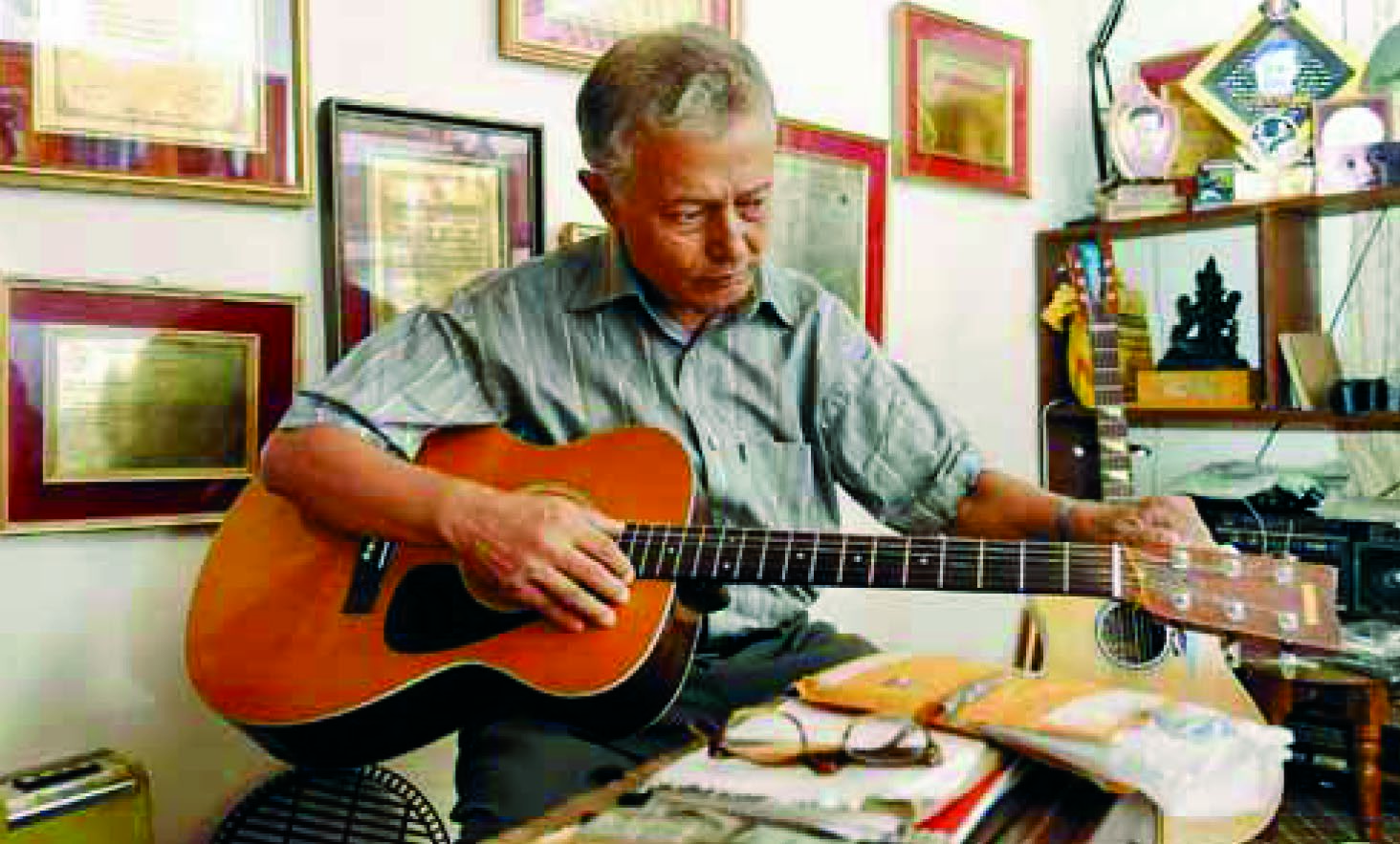
File photo: THT


Legendary singer Prem Dhoj no more
Known for his romantic melodies, Pradhan’s demise marks the end of the glorious era of modern music of Nepal
Legendary Nepali singer Prem Dhoj Pradhan, also known as the king of romantic melodies, has died. He was 82.
Pradhan breathed his last on May 6 at 1:45 pm, at Kathmandu Neuro and General Hospital in the Capital, due to a heart attack.
Manju Kumar Shrestha, a relative of the late singer, said, “Prem Dhoj Pradhan had been admitted to the hospital for 11 days due to difficulties caused by chest infection and the sudden news from doctors about his demise was heart-breaking for the family.”
However, he shrugged off the news about Pradhan being COVID-19 positive as “false”.
Pradhan’s demise marks the end of a glorious era of modern music scene in the country.
Born on June 11, 1938, in Chautara of Sindhupalchowk district as the only son of Pran Devi and Ratna Dhoj Pradhan, Prem Dhoj’s early connection to music came from his mother, a singer herself.
“She used to sing classical songs at the then royal palaces. She was the first to teach music to Prem Dhoj,” shared, Nepali film director, writer and producer, Prakash Sayami.
Recalling his memories, Sayami said that Prem Dhoj received his first name from one of his teachers at his school in the Valley.
“Since his real name was Ganesh Dhoj Pradhan, one of his teachers finding him ‘cute and lovely’ started calling him ‘Prem’ which means ‘love’ in English. Hence, Prem Dhoj inherited the new name.”
Destined to become a musician, Prem Dhoj went to give a voice test at Radio Nepal in 1952 where he sang the song Yaad Kasaiko Aai Rahecha which initiated his journey into the world of music.
He went on to sing on hit numbers such as Yo Nepali Sir Uchali, Ghumti Ma Na Aau Hai, Na Maana Laaj Yesari, Hasne Raharharu Anshuma, Para Laijau Fulaharu, among many others.
He also went on to sing a number of Newari songs like Balabala Chingu Mikha Ohu, Wachu Galli Tochu Galli, Rajamati Kumati, et cetera which “were equally popular”, as per Sayami.
According to Sayami, Ustad Ganesh Lal Shrestha from the Valley was the “only person who Prem Dhoj learned music from”, apart from his mother.
In an interview with The Himalayan Times, published on August 7, 2010, Prem Dhoj had shared about the growth of polyp that was detected on his left vocal cord in 1961 and after a successful operation he was forced to take a break from singing and that was when he discovered the guitar, making him one of the few first Nepali artistes to perform playing a guitar.
When he started to work at the American Library, he realised that he could afford to record songs and so went to Kolkata in 1962 and by 1965 he had recorded 16 songs.
Among those songs were the popular numbers Goreto Tyo Gau Ko, Maya Na Mara Mayalu among others.
“To earn his living, Prem Dhoj used to work at the American Library at New Road but he also kept singing new songs at Radio Nepal side-by-side,” Sayami shared.
Sayami further shared that Prem Dhoj had sung a few of his songs on the occasion of 1970 Filmfare Awards in India where he instantly drew attention of some famous musicians there like Mohammed Zahur Khayyam Hashmi who “was so enamoured by Prem Dhoj’s singing that he requested Prem Dhoj to stay in Mumbai”.
However, Prem Dhoj refused saying, “I have to take care of my mother”.
As a playback singer, Prem Dhoj sang in movies such as Maitighar, Jeevan Rekha, Pachchis Basanta, among others. The late singer also worked in songs with renowned Indian classic singers such as Usha Mangeshkar and Asha Bhosle “on different occasions” as per Sayami.
Glorifying the role of the late singer in promoting rising talents in the country, Sayami said that Prem Dhoj along with singer Manik Ratna Sthapit, were the ones to “formally launch Swar Samrat Narayan Gopal through Radio Nepal in 1962”. Manik Ratna and Prem Dhoj were close and worked together and people knew the duo as Prem-Manik.
In the same interview with The Himalayan Times, Prem Dhoj also remembered that “there was just a handful of artistes whom we could count on our fingers. Bachhu Kailash, Narayan Gopal and I were among the few who were doing very good”.
Sharing about the final years spent with the late singer, Sayami said, “He was so active and disciplined as a singer and a human being, and had an immense respect towards music. With him, a chapter in the country’s golden age of music has been closed.”
The legendary singer has been honoured with several awards, some of which include: Best Professional Singer Award, Best Playback Singer Award, Gorkha Dakshin Bahu, Chinnalata Puruskar, among others.
Veteran singer Deep Shrestha remembering the late Prem Dhoj said, “I first got a chance to meet him in 1964 in Biratnagar during his stage performance and then we had been in constant touch since I came to the Valley five years later.
He was such a humble and downto-earth person who shared his knowledge with all. His death has caused a big loss to the whole nation in many aspects.”
Similarly, sharing the time he spent with the late singer, singer Yogeshwar Amatya said, “He was not only one of the greatest singers in the country, he also was a great human being with his ever-cheerful and friendly persona. I grew up listening to his songs which were very popular back then as they are now. His sudden demise is a great loss for the country’s music scene.”
Agni Prasad Sapkota, Speaker of the House of Representatives tweeted: “I have been hurt by the news of the demise of the Prem Dhoj Pradhan. I want to offer my deep condolences to the bereaved family and promise that the late singer’s contribution to the country’s music will be remembered.”
His last rites were performed on May 6 at Pashupati Aryaghat amidst the presence of a few of his near and dear ones, keeping in mind the ongoing pandemic.
The late singer is survived by his wife, two sons, two daughtersin-law, and two grandsons.
Pradhan breathed his last on May 6 at 1:45 pm, at Kathmandu Neuro and General Hospital in the Capital, due to a heart attack.
Manju Kumar Shrestha, a relative of the late singer, said, “Prem Dhoj Pradhan had been admitted to the hospital for 11 days due to difficulties caused by chest infection and the sudden news from doctors about his demise was heart-breaking for the family.”
However, he shrugged off the news about Pradhan being COVID-19 positive as “false”.
Pradhan’s demise marks the end of a glorious era of modern music scene in the country.
Born on June 11, 1938, in Chautara of Sindhupalchowk district as the only son of Pran Devi and Ratna Dhoj Pradhan, Prem Dhoj’s early connection to music came from his mother, a singer herself.
“She used to sing classical songs at the then royal palaces. She was the first to teach music to Prem Dhoj,” shared, Nepali film director, writer and producer, Prakash Sayami.
Recalling his memories, Sayami said that Prem Dhoj received his first name from one of his teachers at his school in the Valley.
“Since his real name was Ganesh Dhoj Pradhan, one of his teachers finding him ‘cute and lovely’ started calling him ‘Prem’ which means ‘love’ in English. Hence, Prem Dhoj inherited the new name.”
Destined to become a musician, Prem Dhoj went to give a voice test at Radio Nepal in 1952 where he sang the song Yaad Kasaiko Aai Rahecha which initiated his journey into the world of music.
He went on to sing on hit numbers such as Yo Nepali Sir Uchali, Ghumti Ma Na Aau Hai, Na Maana Laaj Yesari, Hasne Raharharu Anshuma, Para Laijau Fulaharu, among many others.
He also went on to sing a number of Newari songs like Balabala Chingu Mikha Ohu, Wachu Galli Tochu Galli, Rajamati Kumati, et cetera which “were equally popular”, as per Sayami.
According to Sayami, Ustad Ganesh Lal Shrestha from the Valley was the “only person who Prem Dhoj learned music from”, apart from his mother.
In an interview with The Himalayan Times, published on August 7, 2010, Prem Dhoj had shared about the growth of polyp that was detected on his left vocal cord in 1961 and after a successful operation he was forced to take a break from singing and that was when he discovered the guitar, making him one of the few first Nepali artistes to perform playing a guitar.
When he started to work at the American Library, he realised that he could afford to record songs and so went to Kolkata in 1962 and by 1965 he had recorded 16 songs.
Among those songs were the popular numbers Goreto Tyo Gau Ko, Maya Na Mara Mayalu among others.
“To earn his living, Prem Dhoj used to work at the American Library at New Road but he also kept singing new songs at Radio Nepal side-by-side,” Sayami shared.
Sayami further shared that Prem Dhoj had sung a few of his songs on the occasion of 1970 Filmfare Awards in India where he instantly drew attention of some famous musicians there like Mohammed Zahur Khayyam Hashmi who “was so enamoured by Prem Dhoj’s singing that he requested Prem Dhoj to stay in Mumbai”.
However, Prem Dhoj refused saying, “I have to take care of my mother”.
As a playback singer, Prem Dhoj sang in movies such as Maitighar, Jeevan Rekha, Pachchis Basanta, among others. The late singer also worked in songs with renowned Indian classic singers such as Usha Mangeshkar and Asha Bhosle “on different occasions” as per Sayami.
Glorifying the role of the late singer in promoting rising talents in the country, Sayami said that Prem Dhoj along with singer Manik Ratna Sthapit, were the ones to “formally launch Swar Samrat Narayan Gopal through Radio Nepal in 1962”. Manik Ratna and Prem Dhoj were close and worked together and people knew the duo as Prem-Manik.
In the same interview with The Himalayan Times, Prem Dhoj also remembered that “there was just a handful of artistes whom we could count on our fingers. Bachhu Kailash, Narayan Gopal and I were among the few who were doing very good”.
Sharing about the final years spent with the late singer, Sayami said, “He was so active and disciplined as a singer and a human being, and had an immense respect towards music. With him, a chapter in the country’s golden age of music has been closed.”
The legendary singer has been honoured with several awards, some of which include: Best Professional Singer Award, Best Playback Singer Award, Gorkha Dakshin Bahu, Chinnalata Puruskar, among others.
Veteran singer Deep Shrestha remembering the late Prem Dhoj said, “I first got a chance to meet him in 1964 in Biratnagar during his stage performance and then we had been in constant touch since I came to the Valley five years later.
He was such a humble and downto-earth person who shared his knowledge with all. His death has caused a big loss to the whole nation in many aspects.”
Similarly, sharing the time he spent with the late singer, singer Yogeshwar Amatya said, “He was not only one of the greatest singers in the country, he also was a great human being with his ever-cheerful and friendly persona. I grew up listening to his songs which were very popular back then as they are now. His sudden demise is a great loss for the country’s music scene.”
Agni Prasad Sapkota, Speaker of the House of Representatives tweeted: “I have been hurt by the news of the demise of the Prem Dhoj Pradhan. I want to offer my deep condolences to the bereaved family and promise that the late singer’s contribution to the country’s music will be remembered.”
His last rites were performed on May 6 at Pashupati Aryaghat amidst the presence of a few of his near and dear ones, keeping in mind the ongoing pandemic.
The late singer is survived by his wife, two sons, two daughtersin-law, and two grandsons.